
Carbon nanotube technology
A nanostructure at the heart of conductivity.
CNT stands for Carbon Nanotube. CNT Conductive Tile uses carbon nanotubes as an alternative to conventional carbon black or graphite in conductive tile.
THE STRUCTURE BEHIND CONDUCTIVITY
The carbon structure makes the difference.
Conventional conductive tiles use carbon black or graphite. CNT Conductive Tile uses carbon nanotubes as its conductive material. The difference between the two approaches begins at the microscopic scale.
Carbon black / graphite
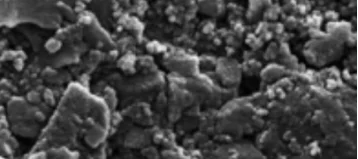 SEM ×10,000
Amorphous or layered structure
Carbon black or graphite serves as a conductive additive within the tile.
Carbon nanotube (CNT)
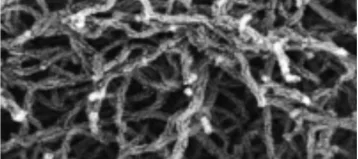 SEM ×10,000
Cylindrical nanostructure
Carbon nanotubes dispersed in a special binder support conductivity in the multilayer tile.
HOW DOES THIS BECOME A FLOOR?
From material to production, designed for conductivity.
A special binder
CNT is dispersed in a special binder within the multilayer structure.
Strengthening the CNT–PVC bond
Inline coating is designed to strengthen bonding between CNT and PVC during production.
Designed for lasting conductivity
The material structure and controlled production support both conductivity and durability.
Images and structure descriptions: DOOHA, SEM ×10,000. This compares conductive materials, rather than electrical resistance measurements of a finished floor. Source ↗
Compare the material dataCompare the materials
The manufacturer’s comparison of conventional carbon materials and CNT. These values describe raw materials; they are not electrical resistance values for an installed floor.
| Property | Carbon black / graphite | Carbon nanotube (CNT) |
|---|---|---|
| Structure | Amorphous or layered | Cylindrical nanostructure; single- or multi-walled |
| Specific surface area (m²/g) | 20–1,500; graphite approximately 20 | 250–1,500 |
| Tensile strength (GPa) | < 0.1; brittle | 50–150 |
| Thermal conductivity (W/m·K) | 5–400 | 3,000–6,000 |
| Electrical conductivity (S/cm) | 10²–10⁴ | 10³–10⁶ |
| Charge mobility (cm²/V·s) | Approximately 1,000; graphite | Approximately 100,000 |
Values are from the manufacturer’s material comparison. SEM images are presented at ×10,000 magnification. Material data does not replace a test report for a completed flooring system. Manufacturer product information ↗
FREQUENTLY ASKED
Clear answers to your questions.
How do carbon nanotubes differ from carbon black and graphite?
Carbon black and graphite have amorphous or layered structures. Carbon nanotubes are very fine, cylindrical structures. The CNT conductive tile material approach is based on dispersing these tubes within a special binder.
What do carbon nanotubes do inside the tile?
Carbon nanotubes contribute to the tile’s electrical conductivity. Inline coating and compounding support the bond between CNT and PVC; continuous pressing and controlled curing turn the material into a finished tile.
Is antistatic flooring the same as ESD flooring?
The word antistatic alone does not establish a floor’s ESD performance. Electrical resistance, grounding connections and use conditions are assessed together. When the aim is to control charge on personnel, the flooring and footwear system is also considered together.
From CNT to tile
CNT and PVC bonding
Inline CNT coating and compounding are designed to strengthen the bond between CNT and PVC during chip production.
A special binder
The distribution of carbon nanotubes in a special binder supports conductivity and durability within the multilayer structure.
Continuous pressing
The Double Belt Press method is integrated with polishing, curing, cutting and automatic packaging in one production line.